
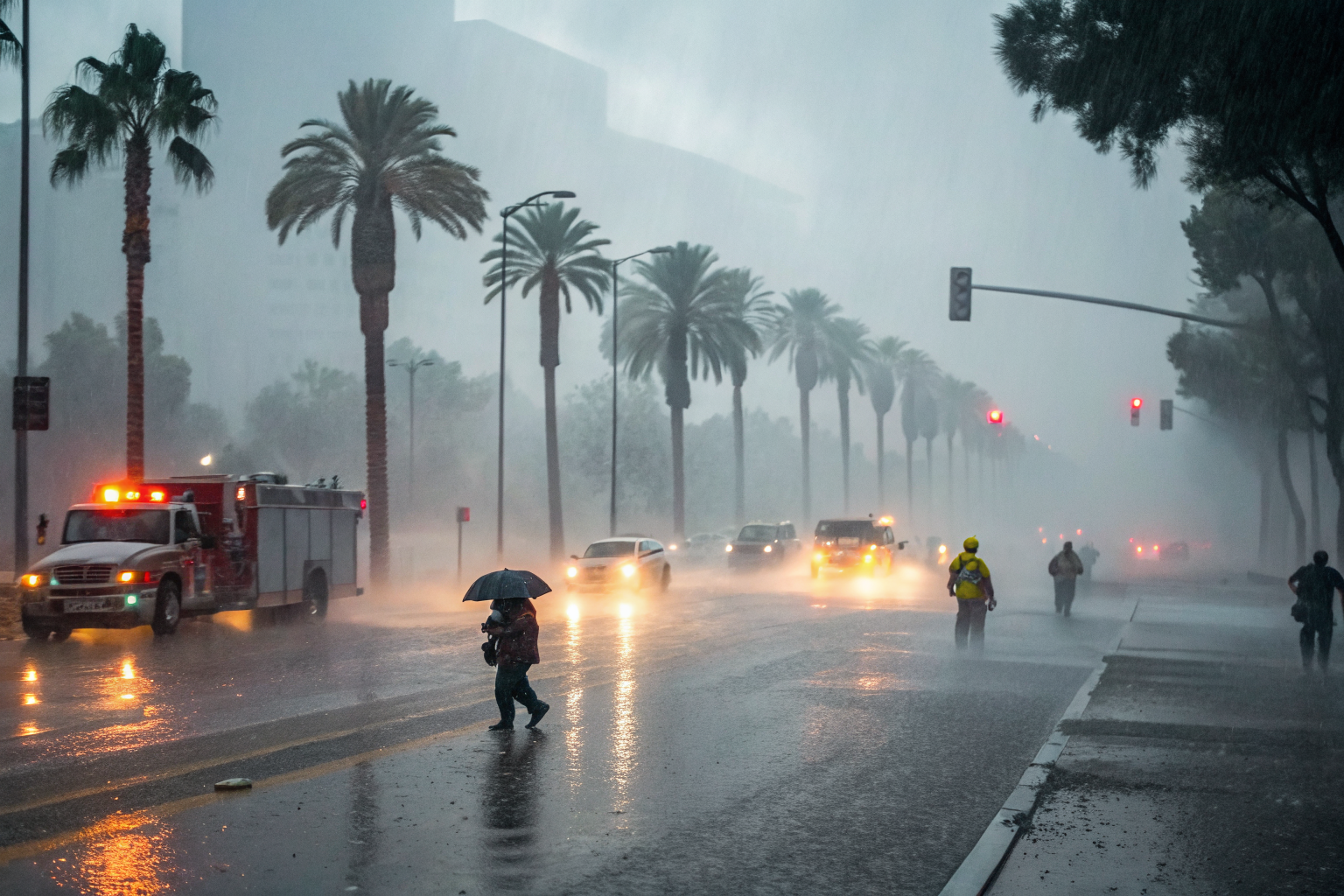
Monsoon season phoenix businesses face a 90-day window starting June 15 where roofing, HVAC, and restoration companies either capture the surge or watch competitors answer it. Every storm cell that moves through the Valley fires a call spike within hours. The businesses that answer those calls get the jobs. The ones that don’t lose them permanently.
Key Takeaways:
- Phoenix monsoon season runs June through September, roofing and HVAC companies report call volume spikes of 3x to 5x their off-season baseline during active storm weeks
- 85% of missed calls never call back, which means a single unanswered surge call during monsoon is a lost job, not a delayed one
- An AI receptionist answers every call at once with no per-call staffing cost, the surge capture math works at any volume without a single new hire
The Phoenix Monsoon Surge Pattern: What Actually Happens to Call Volume
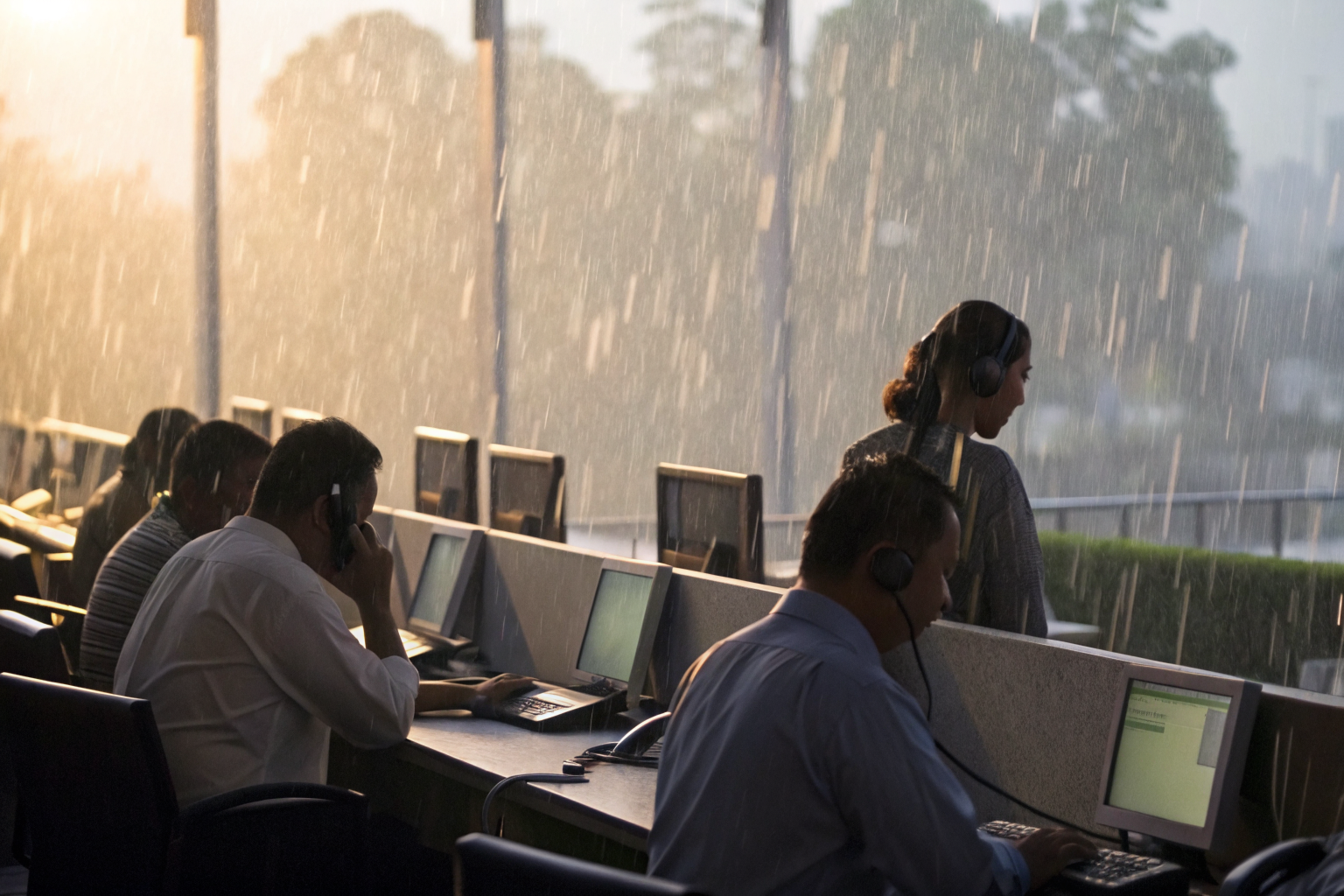
A monsoon call surge is a compressed, unpredictable spike in inbound calls triggered by storm damage, arriving within 2-6 hours of a storm cell moving through the Valley. This means you cannot plan a staffing response the morning of, by the time you know the storm hit, the calls are already coming in.
The National Weather Service defines Phoenix monsoon season as June 15 through September 30. The Valley averages 20-30 haboob and monsoon storm events during that window. Each event follows the same pattern: the storm hits, residents walk outside, they see shingle damage or a dead AC unit or water in the garage, and they search and call immediately. The caller experience from that moment forward is entirely time-compressed. Nobody waits until Monday morning to call a roofer after a Sunday night haboob.
Phoenix monsoon season triggers multi-week call volume spikes for roofing, HVAC, and restoration businesses because storm damage maps directly to those services and the decision to call happens within hours of visible damage. The surge isn’t gradual. It fires fast, runs hot for 24-48 hours, then goes quiet until the next cell.
Three call types spike after each event. Emergency service calls come first, the AC that won’t turn on, the roof that’s actively leaking. Damage assessment requests follow, homeowners who saw something but aren’t sure how bad it is. Quote calls from neighbors who watched a contractor truck next door round out the mix. Each call type has a different urgency window, but all three have one thing in common: the caller is also calling your competitors at the same time.
Which Trades Get Hit Hardest, and What the Call Mix Looks Like
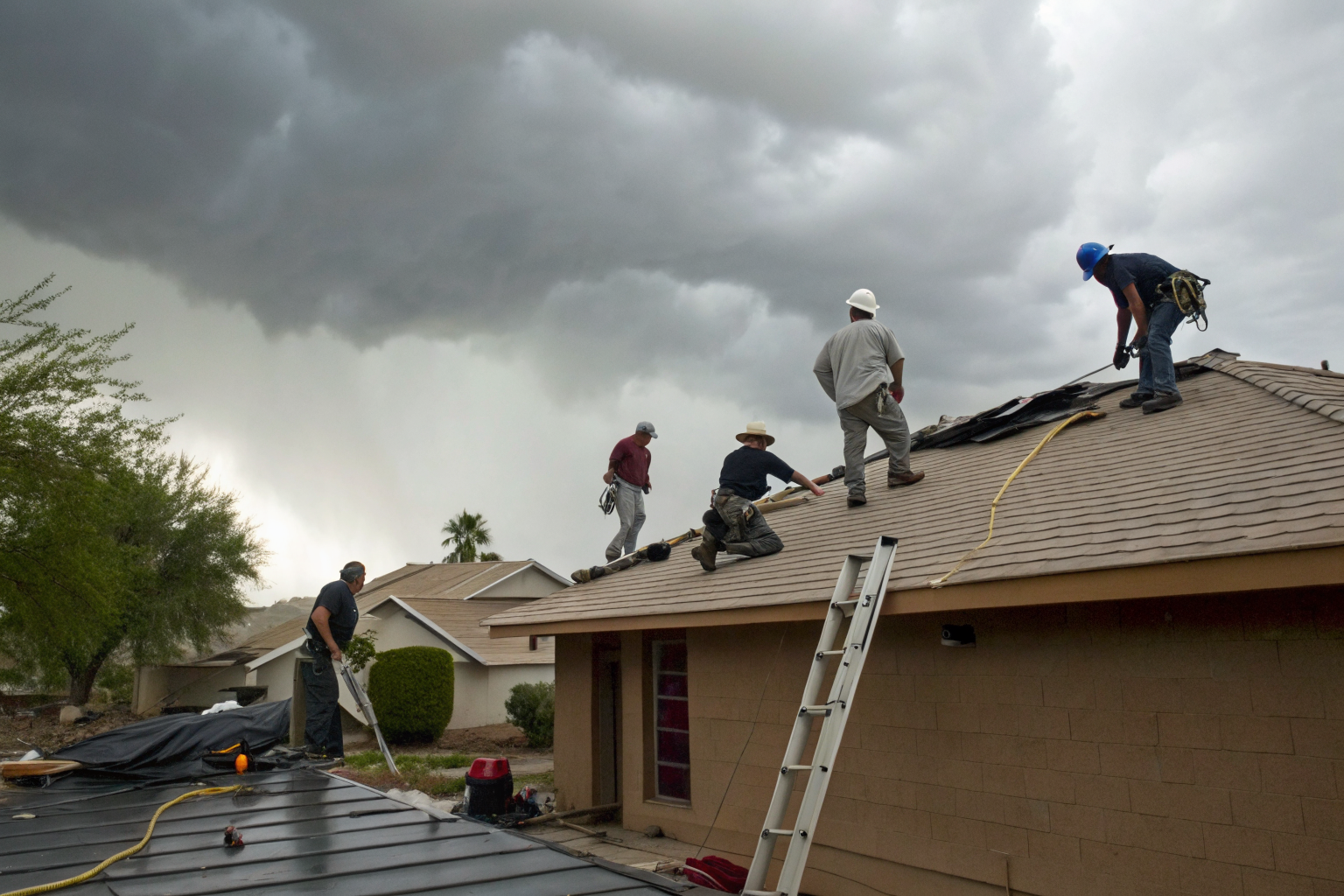
Roofing, HVAC, and water-restoration companies receive disproportionate monsoon call spikes because storm damage maps directly to their services. Pool service and landscape crews get hit too, but the urgency window is different.
| Trade Vertical | Primary Damage Trigger | Dominant Call Type | Typical Surge Timing After Storm |
|---|---|---|---|
| Roofing | Wind/hail shingle damage, flat roof pooling | Quote and assessment calls | 6-24 hours post-storm |
| HVAC | Debris impact on outdoor units, brownout failures, compressor flooding | Emergency dispatch calls | 0-6 hours post-storm |
| Water/Flood Restoration | Interior flooding from breached doors, windows, or roof | Emergency dispatch calls | 0-12 hours post-storm |
| Pool Service | Debris loads, pump/filter damage, waterline damage | Quote and scheduling calls | 12-48 hours post-storm |
| Landscape/Tree Service | Downed limbs, uprooted trees, fence damage | Quote calls | 24-72 hours post-storm |
HVAC emergency calls in Phoenix can spike to 200+ per day for mid-size companies during the first 48 hours after a major storm cell, based on pattern reports from Phoenix trades forums and industry sources, verify with your own dispatch records or supplier contacts.
The urgency reality for quote calls matters here. A homeowner who calls three roofing companies after a storm books with whoever calls back first. That window is 24-48 hours before they move on. After that, the caller has either found someone or decided to wait and try again next season. The lead qualification moment, capturing the address, damage type, and contact info, has to happen on that first call. If it goes to voicemail, the lead is gone. Businesses that understand why callers hang up on small businesses know the voicemail drop-off is not a maybe. It’s a near-certainty.
Why Temp Staffing Doesn’t Solve a Surge, and What the Math Looks Like
A temp receptionist cannot be hired, onboarded, and answering phones the same afternoon a storm hits. The surge is already running by the time you know it started. You’d need to have predicted the exact date of a weather event, placed the staffing order days in advance, and had the temp sit idle until the storm arrived. That’s not how any of this works.
The economics make it worse. Phoenix receptionist wages run $30-42K per year according to BLS and local market data. Temp agency markup adds roughly 40-50% on top of the hourly rate, pushing a $20/hr temp to $28-30/hr all-in. And a single temp still can’t handle simultaneous calls. If 12 people call within the same 20 minutes after a storm, which happens, one person answers the first call and 11 others hit a busy signal or a ring that nobody picks up.
An AI receptionist answers every inbound call at the same time. No ramp time. No per-hour cost scaling with volume. No maximum simultaneous call count. The surge capacity ceiling disappears.
The one concern trades owners raise about automated phone answering for small business is that the AI will sound robotic or miss nuance on a storm-damage call. That’s a fair concern and worth addressing directly. Qualification scripts are tuned to each business’s service area and damage types before go-live. The AI isn’t guessing what a roofing caller needs, it’s running a configured script built for that exact scenario. Call (888) 789-8030 right now and hear how it actually sounds before making any judgment about it.
How Does an AI Receptionist Handle Storm Calls Without a Script for Every Scenario?
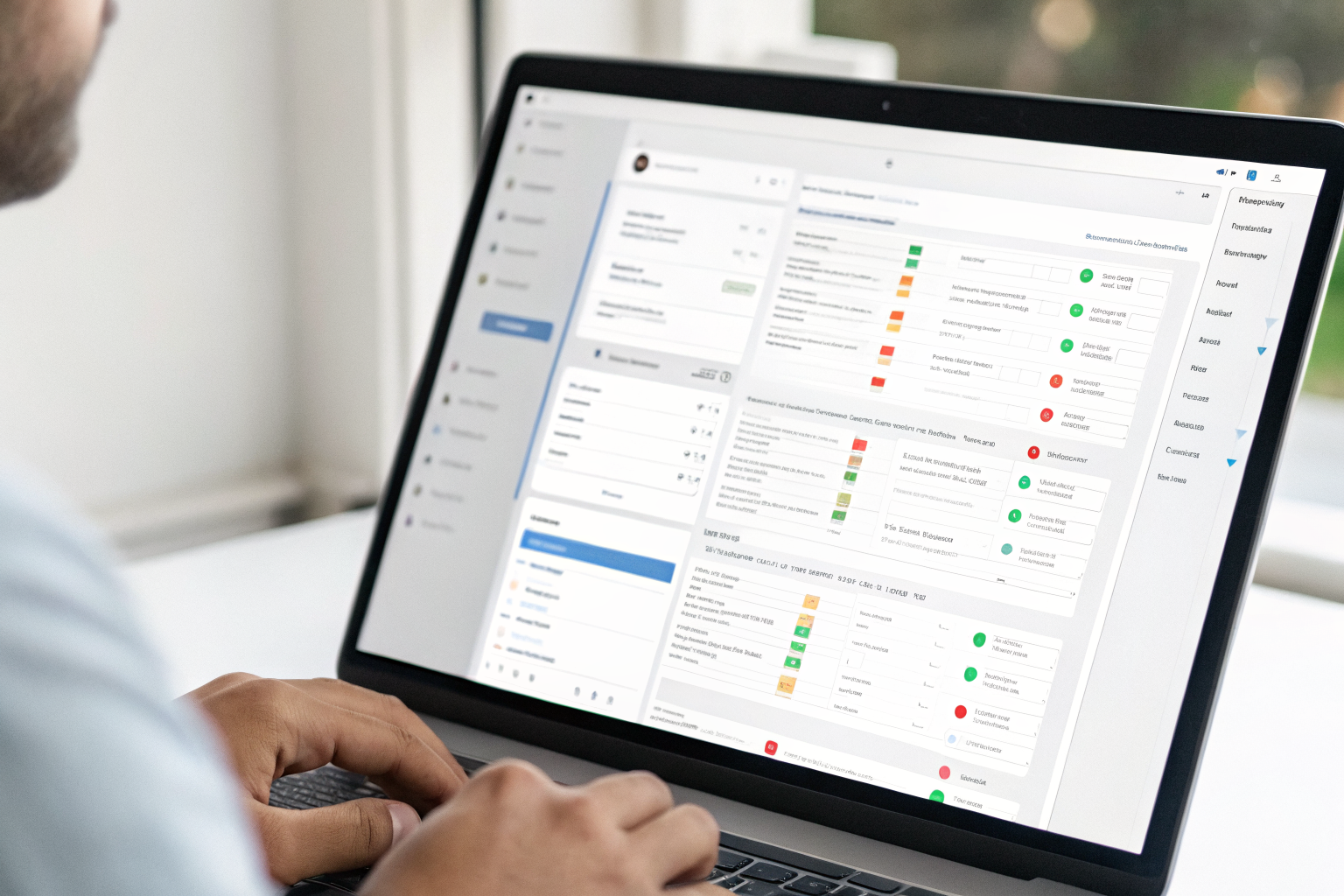
The AI receptionist qualifies storm-damage callers and routes them without requiring a unique script for every damage type because the intake logic handles intent classification, not damage-type memorization. Here’s the live call flow during a surge:
Answer immediately. The AI picks up every inbound call regardless of how many are coming in at once. The caller experience starts with a live response, not a ring count before voicemail. Per the ai for customer service framework, immediate answer is the single biggest conversion factor in a surge environment.
Classify intent. The system detects whether the caller needs emergency dispatch now, wants to schedule a quote or assessment, or is asking general questions about services. This classification happens in the first 15-20 seconds of the call through the voice AI call handling flow.
Escalate emergencies to a human. For emergency calls, the AI fires the configured handoff trigger immediately. The call routes to a live technician or on-call line. The AI doesn’t try to book a roof with an active interior flood at 11pm, it captures the info and escalates. That’s the human handoff design.
Qualify and book non-emergency callers. For quote and assessment calls, the AI captures address, damage type, urgency window, and contact info, then books a slot in the calendar or logs the lead for a callback. The lead qualification step happens on the call, not after a voicemail transcription that nobody checks until tomorrow.
Handle after-hours calls identically. A storm doesn’t check your office hours. Calls that come in at 9pm on a Saturday get the same intake flow as a Monday morning call. No voicemail. No lost lead.
67% of customers hang up if they don’t receive immediate assistance. During a monsoon surge when every competitor is also overwhelmed, the business that answers first gets the job. That’s the entire competitive edge, speed to answer, not speed to quote.
Monsoon Readiness Checklist: What to Set Up Before June 15
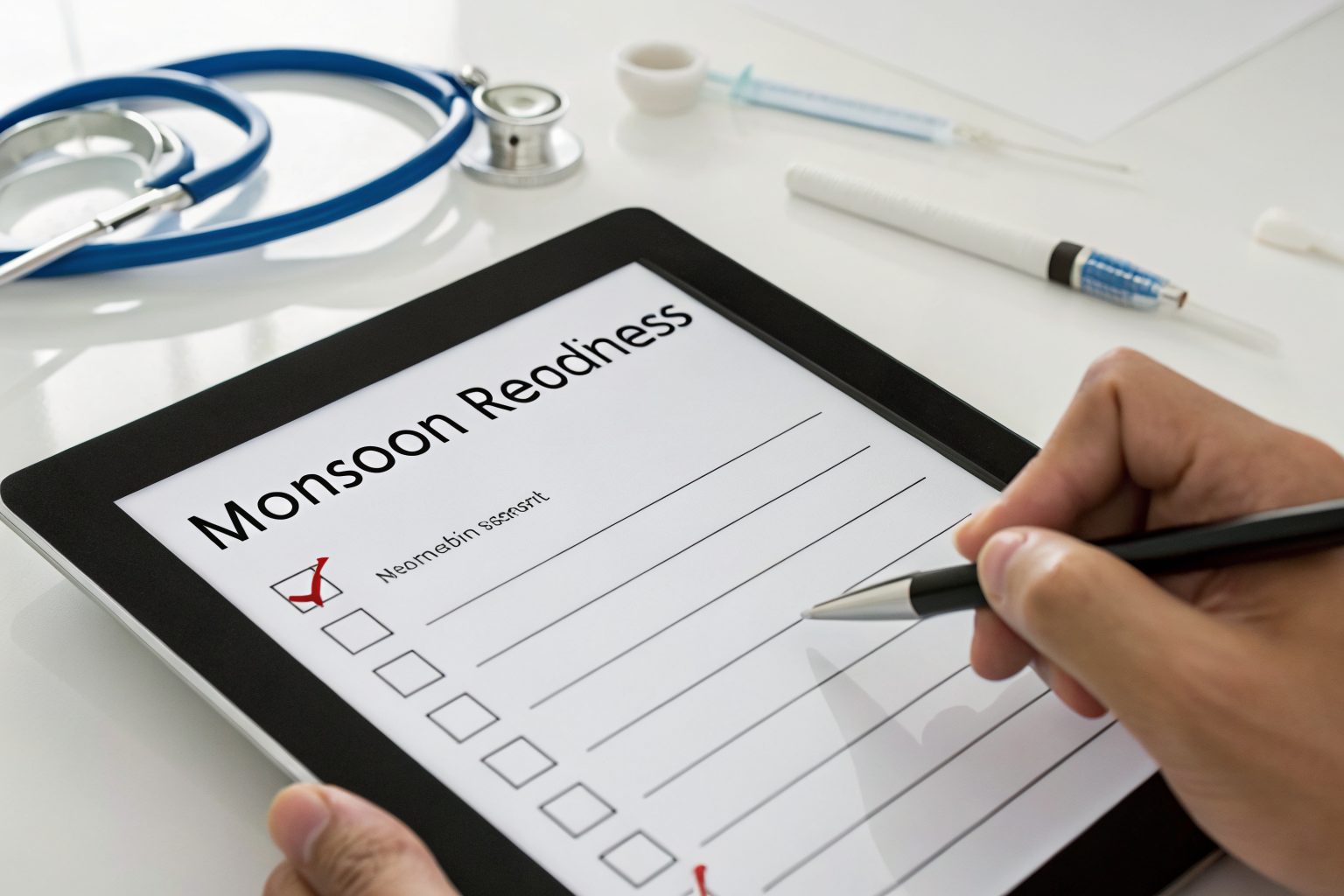
A seasonal readiness checklist reduces missed monsoon calls by ensuring the AI receptionist is configured for surge conditions before storm season opens. Run through this before June 15, not after the first storm.
Audit your call-forwarding setup. Confirm calls forward before the second ring. Four-ring forwarding with a voicemail pickup is a missed-call machine during a surge. Test it by calling your own number from a cell phone right now.
Update your qualification script for storm-damage scenarios. Your off-season intake script probably doesn’t ask about damage type or capture urgency level. Add those fields before monsoon season opens. The AI needs to know whether to route the caller to emergency dispatch or the booking calendar.
Set your emergency escalation triggers. Decide which keywords or caller descriptions route immediately to a human rather than the booking flow. “Water coming through the ceiling” is not a schedule-a-quote call. Configure the handoff threshold explicitly.
Confirm after-hours routing is live and tested. Most storm calls arrive at night or on weekends. If your after-hours routing still points to a voicemail box, you’re donating those leads to the next company on the search results page. This is the same failure pattern that businesses in Gilbert and across the East Valley report season after season.
Verify CRM and calendar integration. Booked assessment slots during a surge need to land in your actual calendar, not a spreadsheet someone checks twice a day. Double-booking a survey appointment during peak surge days burns client relationships before the job even starts.
Run a full call flow test. Call your own number before June 15 and walk through a storm-damage scenario. Play the caller. Say you have shingle damage, give a fake address, ask for an emergency assessment. See exactly what your callers will experience.
Set a surge capacity threshold. Know at what point you stop booking new quotes and move to a waitlist. The AI can communicate that you’re at capacity and offer a callback slot rather than booking a slot that your crew can’t reach. Callers respect honesty about capacity. They don’t respect a missed appointment.
85% of missed calls never call back. During monsoon season when 10-20 calls arrive in the same hour, that number applies to every call that rings to voicemail.
Frequently Asked Questions
When does monsoon season actually start and end in Phoenix?
The National Weather Service defines Phoenix monsoon season as June 15 through September 30. Call volume spikes for trades businesses follow storm events within 2-6 hours of a significant cell moving through the Valley. July and August carry the highest storm frequency, which makes those the peak surge weeks for roofing, HVAC, and restoration call volumes.
Do roofing companies really get more calls after a monsoon storm?
Yes. Roofing companies report some of their highest single-day call volumes in the 24-48 hours after a major Phoenix monsoon event, driven by wind and hail damage to shingles and flat roofs. Every roofing contractor in the area gets the surge at the same time because the same storm hits hundreds of homes. The first company to answer the phone gets the job, that’s not an exaggeration, it’s what contractors report from experience.
How does an HVAC company handle 100+ calls in a day after a storm?
With a single receptionist or an owner answering their own phone on a job site, they can’t. An AI receptionist answers every inbound call at the same time, qualifies each caller by urgency and service type, and either books a slot or escalates true emergencies to a technician immediately. The volume ceiling disappears because simultaneous call capacity has no upper limit.