

A business text message service is the difference between a reply and a lost lead. When a customer texts your business number and gets silence, they don’t wait, they text the next result on Google. This is part of the broader challenge of ai for customer service that every small business owner faces: customers expect a response on whatever channel they choose, right now.
Key Takeaways:
- Speed-to-lead is decisive: businesses that respond to inbound texts within 5 minutes are 100x more likely to connect with that lead than those who wait 30 minutes, according to research cited by Harvard Business Review.
- A business text message service handles inbound SMS qualification, collecting job type, location, and urgency, before a human ever needs to respond.
- A2P 10DLC registration is required before any business sends automated SMS at scale; unregistered messages face carrier filtering and potential fines under TCPA.
What Is a Business Text Message Service, and What Makes It ‘AI’?

Inbound SMS automation is a system that reads text messages customers send to your business number, interprets what they want, and continues a two-way conversation to qualify the lead without human intervention. This means a plumber, a salon owner, or a dental office can capture job details, contact information, and scheduling preferences from a text thread at 9pm, and wake up to a structured lead record instead of a missed opportunity.
This is not the same as a basic autoresponder. An autoresponder fires one fixed message when a text arrives: “Thanks for reaching out, we’ll get back to you soon.” That’s a dead end. An AI text answering service reads the customer’s reply and responds to whatever they say. The conversation branches based on intent.
Here’s a concrete example. A customer texts: “My water heater is leaking.” The AI identifies an urgent service request, asks for the address, asks whether they want an emergency visit or a morning appointment, confirms the time slot, and writes the record to the CRM. No one picked up a phone. No one was awake.
What the AI adds is intent recognition. It reads free-form text, not commands, not menu options, and responds in plain conversational language that fits the context. A two-way conversation flow is what separates a qualifying AI system from a glorified out-of-office message.
One thing to be clear about: this page covers customers who choose to text your business first. The missed call text back service is a separate mechanism that triggers when a phone call goes unanswered. Those are two different entry points into the same customer communication channel stack. An ai receptionist handles the voice side of that equation; this service handles the text-first customer.
Open rates for SMS messages average around 98% versus roughly 20% for email, based on widely cited industry patterns across SMS platforms. The channel your customers already prefer is the one that needs to be covered.
How Inbound SMS Qualification Actually Works: The Conversation Flow
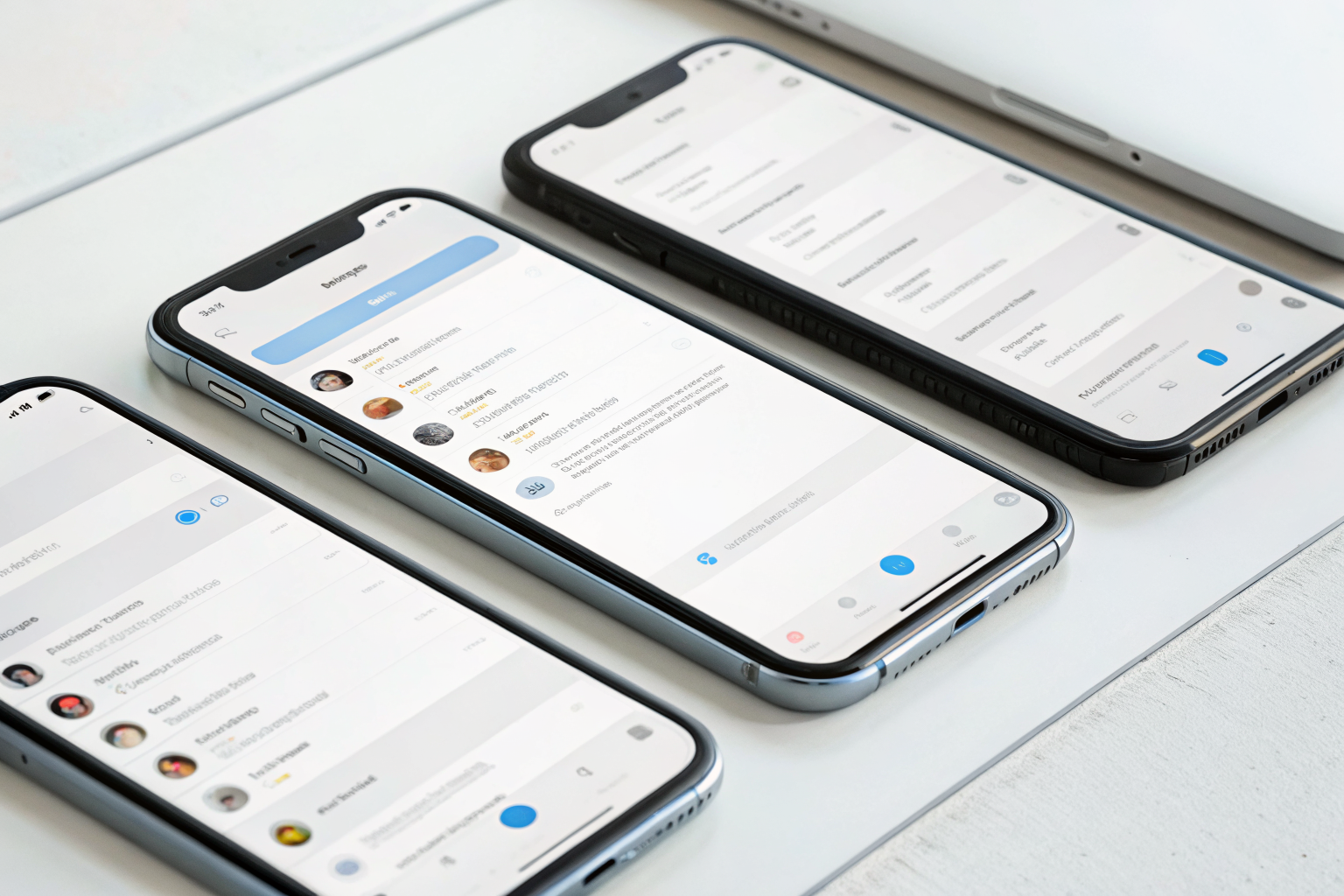
Inbound SMS qualification runs a defined sequence, but it doesn’t feel like one to the customer. They’re texting in plain English. The AI is doing the work of reading, categorizing, and responding in kind.
Here’s the step-by-step:
- Customer texts the business number. No app, no portal, they text whatever number they have saved or found on Google. The AI picks up the thread immediately.
- AI reads the message and identifies intent. Is this a quote request? An appointment ask? A complaint? An urgent service call? The system categorizes the message before forming a reply.
- AI asks qualifying questions in plain conversational SMS. For an HVAC quote request, that looks like: “What’s the address?” then “Is this a repair or a full system replacement?” then “Are you available Thursday morning or does Friday work better?” Each question is short. Each fits the context of what the customer already said.
- AI offers available time slots or confirms next steps. Once the qualifying data is collected, the system either presents scheduling options or confirms what happens next, a tech will call to confirm, a quote will follow, etc.
- Data writes to the CRM automatically. Name, contact number, job type, location, urgency level, and preferred time slot go into the record without anyone typing them in. The human gets a summary notification, not a raw text thread.
- Flagged handoff for complex situations. When the customer’s need goes beyond what the AI can resolve, a pricing dispute, a complaint requiring judgment, a situation that needs nuance, the thread gets flagged for human follow-up with the full conversation context already captured.
This is not a “press 1” experience. The AI reads free-form text and responds appropriately. A customer who texts “actually it’s getting worse, can someone come today?” mid-conversation doesn’t break the flow, the AI adjusts.
Businesses that follow up with inbound leads within 5 minutes are 100x more likely to make contact than those who wait 30 minutes, per Harvard Business Review speed-to-lead research. The AI handles that 5-minute window at any hour.
Business Text Message Service vs. SMS Autoresponder App: What’s the Real Difference?

A searcher who lands here after looking at an SMS autoresponder app deserves a straight answer: they’re not the same tool, and choosing the wrong one costs you leads.
An SMS autoresponder app sends fixed replies. You write the message once, it fires every time a text comes in. That works if all you need is a single confirmation, “Got your message, we’ll call you back during business hours.” It’s cheap, fast to set up, and fine for low-volume simple use cases.
An AI-powered business text message service conducts a dynamic qualification conversation. The AI reads what the customer sends, asks follow-up questions based on that specific message, and routes a qualified lead to the CRM. When the customer says something unexpected mid-thread, the flow continues rather than breaking.
The honest tradeoff: if your entire SMS need is “send one reply,” an autoresponder covers it. The AI service earns its cost the moment the conversation needs to branch.
Platform testing patterns show that autoresponders with static replies see conversation drop-off after the first unexpected customer response, while dynamic AI flows maintain engagement through 3 to 4 message exchanges on average.
| Feature | Basic SMS Autoresponder App | AI-Powered Business Text Message Service |
|---|---|---|
| Conversation depth | Single fixed reply | Multi-turn two-way conversation flow |
| Qualification capability | None, sends one message | Captures job type, location, urgency, timing |
| Handling unexpected replies | Breaks or repeats the same message | Reads free-form text and responds to context |
| CRM integration | Rarely included | Writes structured lead data to CRM automatically |
| A2P 10DLC compliance | Varies; often not managed for you | Built into the setup process |
| Setup complexity | Low, write one message and go | Higher, conversation flows need to be configured |
| Best-fit use case | Single confirmation messages | Lead qualification, appointment booking, triage |
If you’re running an appointment-based business or a trades operation where job details matter, the autoresponder column gets you a courtesy reply. The AI inbound SMS automation column gets you a booked appointment. The customer communication channels your business needs depend on how much work you expect the technology to do.
Setting up the outbound trigger side is covered in detail in the context of sms auto reply for business, this page focuses on what happens when the customer texts first.
A2P 10DLC and TCPA: The Compliance Layer You Cannot Skip

A2P 10DLC registration is not optional paperwork. It’s the carrier infrastructure that lets your business send automated SMS at scale without your messages getting filtered into oblivion or triggering federal violations.
A2P stands for Application-to-Person. The 10DLC part refers to standard 10-digit long code phone numbers, the regular-looking numbers most businesses use for texting. Carriers require brands to register both their company and their specific messaging campaign before automated texts go out. Unregistered numbers face carrier filtering, meaning messages may never deliver. Beyond filtering, the Telephone Consumer Protection Act carries real financial exposure.
Here’s what the compliance stack looks like for any business running inbound SMS automation:
- A2P 10DLC brand registration. Your business registers with The Campaign Registry (TCR) through your messaging provider. This establishes your company as a legitimate sender.
- Campaign use-case registration. Each type of messaging campaign (appointment reminders, lead qualification, customer service) registers separately. Carriers evaluate the use case and assign a throughput tier.
- Opt-in documentation. You may only send automated messages to people who gave express written consent to receive them. For inbound SMS, the customer texting you first establishes initial contact, but your automated reply side still needs to meet consent standards. Document how and where opt-in is collected.
- Opt-out handling. Every automated SMS thread must honor STOP requests immediately and without exception. A customer who texts STOP gets removed from automated follow-up, full stop.
- Message content restrictions under TCPA. Certain content categories (cannabis, firearms, certain financial services) face additional restrictions or outright carrier blocks regardless of registration status. Know your content rules before you send.
TCPA violations carry statutory damages of $500 to $1,500 per message. A compliance failure on a campaign reaching hundreds of contacts becomes a material financial risk fast. Get the registration done before the first automated message goes out.
For businesses in regulated verticals, dental, medical, law, an ai chatbot for customer service or SMS service that handles sensitive information carries additional considerations beyond TCPA. Those compliance questions are worth reviewing separately before you configure the flows.
CRM Handoff and Speed-to-Lead: Where the SMS Data Goes After the Conversation
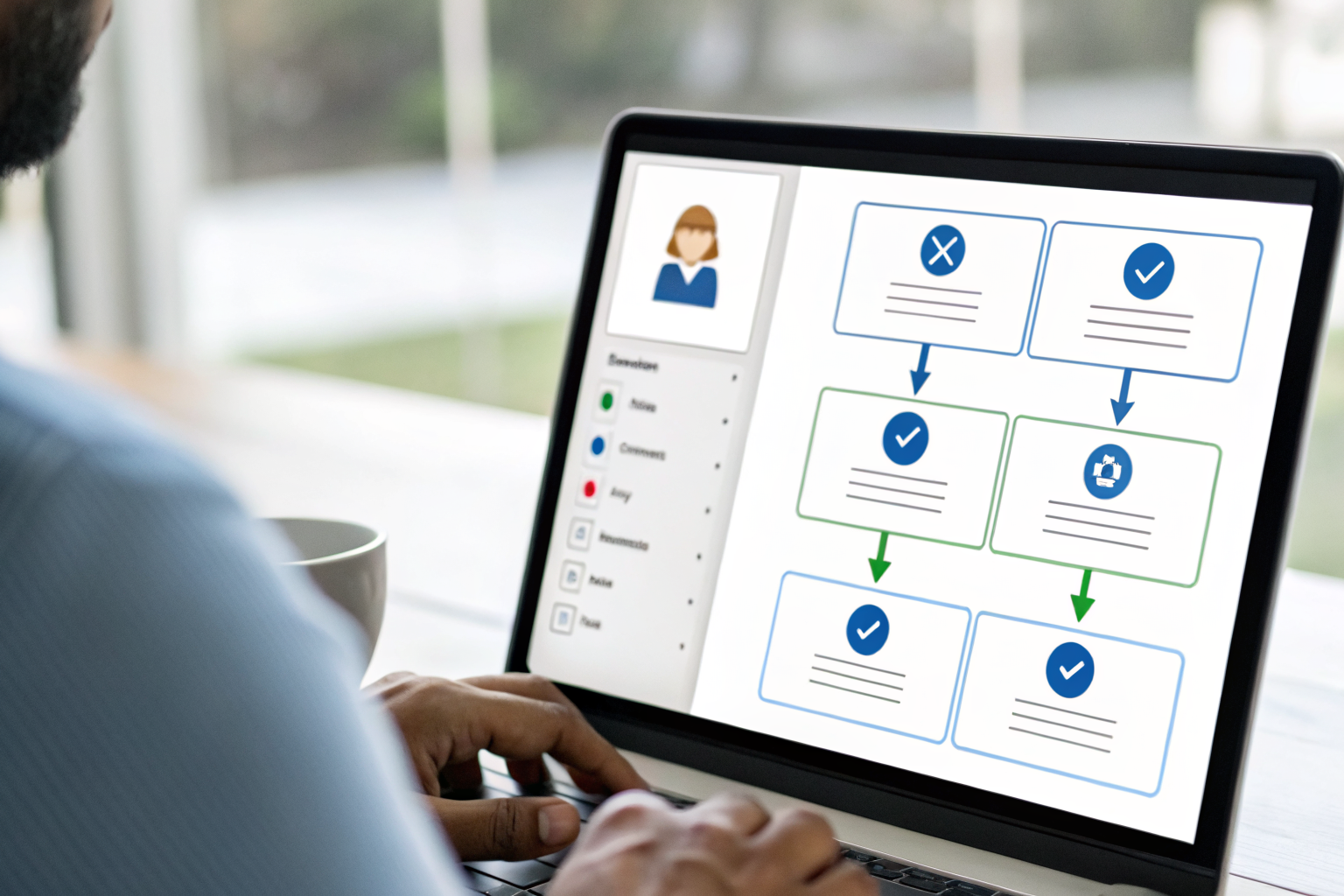
The AI qualifying the lead is half the job. The other half is making sure that qualified data ends up somewhere useful before the customer cools off.
Here’s what a complete CRM handoff looks like. The AI collects name, contact number, job type, location, urgency level, and preferred appointment window during the SMS conversation. When the thread reaches a natural close or a handoff trigger, that data writes to a CRM record automatically. The business owner or office manager gets a notification with the structured summary, not a raw thread of back-and-forth texts to decode.
Speed-to-lead explains why the timing matters. Harvard Business Review’s research on the 100x contact rate difference between 5-minute and 30-minute response windows applies to the follow-up call as much as it does to the initial reply. When a human does reach out after the AI has qualified the lead, the call isn’t a cold “what did you need?”, it’s “I see you need a pool service quote for Friday morning in Chandler, let me confirm that time works.” That’s a warm conversation. The customer already knows what happens next.
This channel sits alongside the ai receptionist (voice) and AI webchat as parallel entry points into the same pipeline. The customer picks the channel; the data lands in the same place. An ai receptionist for dentists or any appointment-based practice gets the same structured record whether the patient called in or texted first.
Missed call text back is a different trigger. That service activates when a call goes unanswered and fires an outbound text to recover the caller. This service handles customers who chose to text first. Both feed the same CRM. Businesses in fast-growth suburbs, where an ai receptionist chandler practice might handle dozens of inbound contacts per week across channels, need both running together to cover the full contact surface.
Pattern from small-business CRM integrations: leads that enter the CRM with qualification data already captured close at a higher rate than raw contact entries requiring a follow-up call just to gather basic job details. The AI did the intake work at 10pm. The human closes the job in the morning. For a deeper look at what these services cost relative to a human alternative, live answering service pricing models give a useful baseline for comparison.
The owner opens the CRM at 7am and sees three qualified SMS leads: job type, location, and preferred time already captured, zero humans required at 10pm.
Frequently Asked Questions
What’s the difference between a text message service for business and a regular texting app?
A business text message service runs on a registered business number that meets A2P 10DLC requirements, handles multiple simultaneous conversations, and writes structured data to your CRM. A personal texting app does none of those things at scale, it sits in your pocket waiting for you to respond manually. The AI layer on top of the business service reads what the customer sends, asks follow-up questions, and captures job details before any human needs to get involved.
Can an AI text answering service qualify leads without sounding robotic?
Modern inbound SMS automation uses conversational phrasing, not menu-style scripts. The AI reads free-form customer messages and responds in plain language that fits the specific context of that thread. Qualifying questions like “What’s the address?” or “Is this urgent or can we schedule for next week?” read like a text from a real person. Want to hear the same voice technology on a call? Dial (888) 789-8030 and have the conversation yourself.
Does a business text message service work if customers text a number they already have saved?
Yes. Inbound SMS automation works on your existing business number as long as that number is SMS-enabled and registered for A2P 10DLC. Customers text whatever number they have, and the AI picks up the conversation automatically. The setup process includes porting or enabling SMS on your current number if it isn’t already active for texting.