
AI receptionist by industry isn’t a one-size-fits-all decision. Two types of Phoenix businesses keep losing calls: ones where the owner can’t physically reach the phone, and ones where the front desk is already busy with the person standing in front of them. Same problem. Different contexts. One fix.
Key Takeaways:
- 85% of missed calls never call back, the industries hit hardest are the ones where the phone rings while the owner or staff are physically occupied with another job or client.
- Field-service trades (HVAC, plumbing, pool, roofing) and appointment-based front-desk businesses (salons, dental, law, chiro) have different call patterns but the same core problem: nobody picks up.
- Sledgehammer Intelligence serves 8 specific verticals across the Phoenix metro, each has a dedicated industry page with vertical-specific scripts, call patterns, and booking logic.
What Makes a Business a Good Fit for an AI Receptionist?

AI receptionist fit is a function of call volume, staff availability, and after-hours demand. This means the question isn’t whether your business gets phone calls, it’s whether a human is free to answer them when they come in.
Two conditions make an AI receptionist the right call. First: calls arrive when no human can answer. The owner is on-site doing the work, under a sink, on a roof, at a pool. Or the staff is occupied with a customer standing right in front of them. Either way, the phone rings and nobody picks up. Second: the call has a predictable outcome. The caller wants to book an appointment, get a quote, or leave a message with a callback number. Those are structured interactions. An AI handles them without friction.
Not every business fits. If your calls are genuinely open-ended from the first second, complex intake scenarios where the conversation could go in 20 directions before you know what the caller needs, a hybrid approach works better. The AI qualifies and routes; a human closes.
92% of customer interactions happen over the phone. In industries where staff can’t physically reach the phone during business hours, that stat turns into lost revenue on every missed call. That’s the vertical fit criteria that matters most: not industry category, but whether your staff is occupied when the phone rings.
This isn’t about cost math. That lives in the ai for customer service pillar. This is purely about fit, and fit comes down to those two conditions.
Field-Service vs. Front-Desk: Two Problems, One Solution
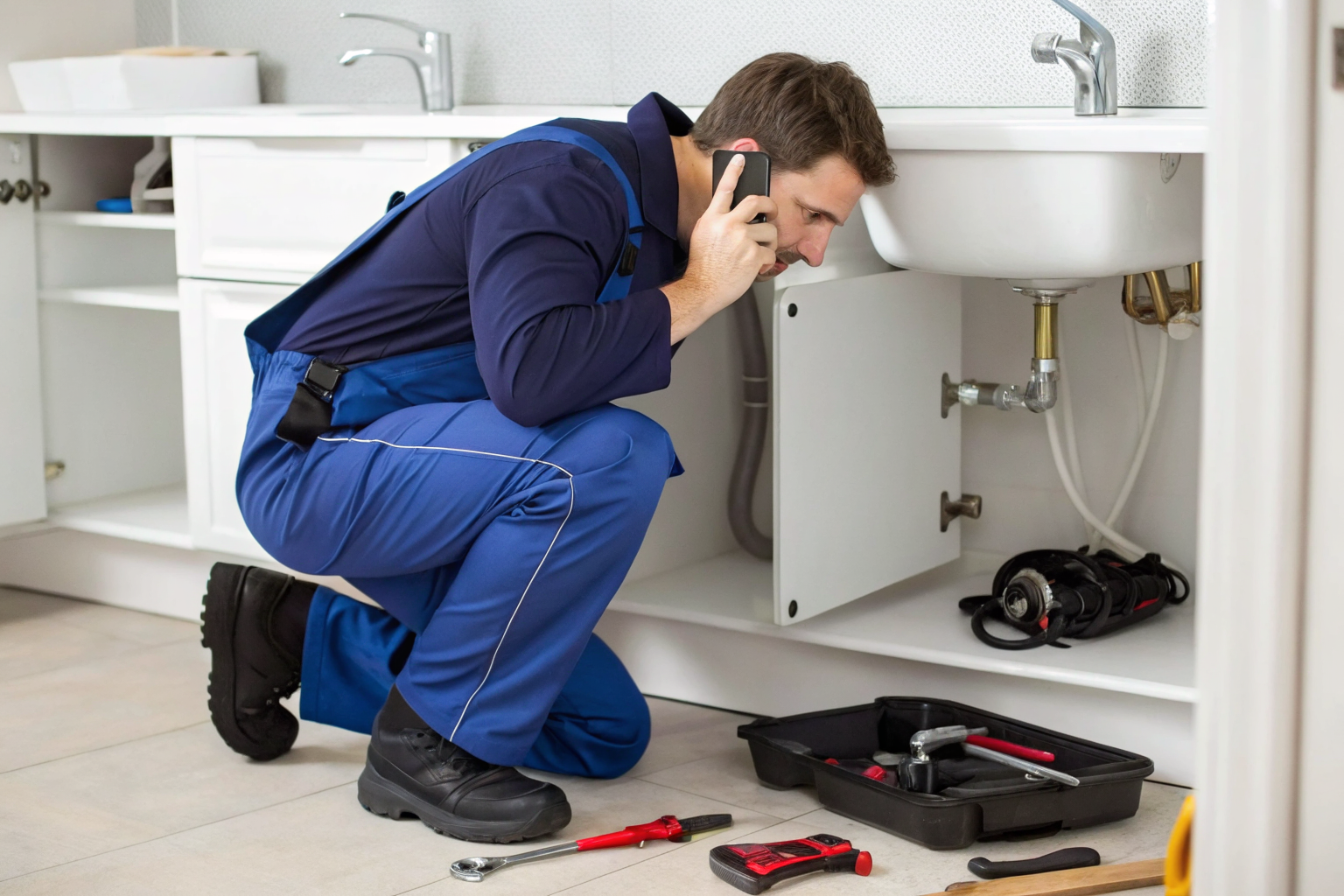
Field-service owners miss calls because they are physically on the job site. A plumber mid-job can’t answer. An HVAC tech in a crawlspace doesn’t have a free hand. The phone rings, nobody picks up, and 67% of those callers hang up without leaving a voicemail.
Front-desk businesses have a different version of the same problem. The receptionist is on the phone with an insurance company while a new patient calls. The stylist is mid-cut and the desk is empty. The caller waits four rings, gets voicemail, and books with whoever picks up first.
The AI answering service handles both patterns. The configuration differs, the AI employee suite gets set up with vertical-specific scripts, calendar integrations, and routing logic that fits the business type. But the outcome is the same: the call gets answered.
| Dimension | Field-Service (Trades) | Front-Desk (Appointment-Based) |
|---|---|---|
| Why calls go unanswered | Owner or tech is on a job site, physically occupied | Staff is with an in-person client or on another call |
| When calls peak | During working hours and after-hours emergencies | During business hours, overlap with peak appointment times |
| What the caller wants | Job quote, service call scheduling, or emergency dispatch | Appointment booking, rescheduling, or general inquiry |
| What the AI does | Captures the inquiry, qualifies urgency, texts back with confirmation | Books directly into the calendar or takes a message with callback info |
The table makes the diagnosis easy. If your business appears in the left column, you’re losing jobs to the next contractor on Google. If it appears in the right column, you’re losing bookings to whoever answers faster. The ai automation services category covers the full solution stack, but the entry point is always the same: answer the call.
The 8 Industries We Serve, and What Each One Needs

Sledgehammer Intelligence serves 8 specific verticals across the Phoenix metro. Each one has a distinct call pattern that kills revenue, and a dedicated industry page built around it.
HVAC, Emergency calls hit at 10pm during Phoenix summer when the AC goes out and the owner is off the clock or running a late job. The AI answers, captures the urgency, and either books the dispatch or routes to the on-call tech. An HVAC company without after-hours coverage loses those jobs to whoever picks up.
Plumbing, Same after-hours emergency pattern, compounded by the fact that one crew can’t answer while they’re mid-job at another address. Burst pipes and water heater failures don’t wait for a callback.
Pool Service, Techs run recurring service routes all day with no free hands. Quoting calls go to voicemail while the tech is at a pool, and the homeowner books with the next company that picks up. Consistent call capture keeps the route full.
Roofing, Storm season in Phoenix creates a surge pattern. One hailstorm generates 50 inbound calls in 48 hours, and every call that goes unanswered goes directly to a competitor. Phoenix monsoon season (June through September) is when roofing and HVAC see peak inbound volume at the exact moment crews are most occupied.
Salons and Med-Spas, A stylist can’t leave a client mid-cut to answer a booking call. A med-spa front desk managing check-ins can’t simultaneously answer new appointment inquiries. Missed bookings during peak hours are the direct revenue leak.
Dental, The front desk is on the phone with insurance while a new patient calls and hangs up. Dental offices often lose new patient acquisition to the practice that picks up first. An ai receptionist for dentists handles that gap without pulling the coordinator off an existing call.
Law Firms, After-hours intake calls come from people in urgent situations. Those callers won’t wait until morning. Confidentiality-sensitive intake scripts matter here, and the AI captures the lead without making promises a human attorney needs to make.
Chiropractic and Medical, Same front-desk pattern as dental. Scheduling is the entire business operation, and no-shows compound the problem. The AI books, confirms, and sends reminders, which cuts no-shows and keeps the schedule full.
For businesses near the East Valley, the ai receptionist chandler page shows exactly how this works in a suburb-specific context, including local call volume patterns and booking integrations common to that market.
How Call Patterns Differ Across Verticals
Per-industry call patterns determine which AI features matter most for each vertical. A roofing company needs emergency-call scripts at 9pm. A salon needs calendar integration at 2pm on a Tuesday. The AI employee suite handles both, but the configuration differs by vertical.
The common misconception is that one AI script works across all service businesses. It doesn’t. A dental office caller asking about a broken tooth needs a different response flow than a homeowner calling about a leaking pipe. The call patterns below show why.
| Vertical | Peak Call Time | Call Urgency | Caller Intent | Key AI Feature |
|---|---|---|---|---|
| HVAC | After-hours (evenings, weekends) | Emergency / same-day | Get immediate dispatch | After-hours answering + urgency routing |
| Roofing | Storm surge, business hours + after | High urgency during weather events | Get a quote fast | Lead capture + callback scheduling |
| Pool Service | Business hours (route overlap) | Routine to moderate | Quote or service scheduling | Lead qualification + callback |
| Salons / Med-Spas | Business hours (peak appointment overlap) | Low urgency, time-sensitive | Book an appointment now | Real-time calendar booking |
| Dental / Chiro | Business hours (front desk occupied) | Moderate, new patient or reschedule | Book or confirm appointment | Calendar integration + confirmation |
The highest-value missed calls in trades happen outside the 8am to 5pm window, the hours when owners are most likely to be running a job and least likely to have a free hand. Front-desk businesses lose calls during their busiest hours, not after them. Those two patterns require different AI configurations.
An answering service arizona option built on human receptionists charges by the minute and can’t scale during a storm surge. The AI answering service doesn’t have that constraint, it answers the 50th call the same way it answers the first. Pair that with sms auto reply for business functionality and callers who hang up before the AI answers still get a text back within seconds.
Pick Your Industry and See Exactly How It Works
Industry-specific pages show vertical scripts, call flows, and Phoenix-market proof for each business type. Each page is built for one vertical, not a generic overview.
- HVAC, after-hours emergency calls answered, urgency captured, and dispatch initiated while you’re off the clock.
- Plumbing, burst pipe calls and service scheduling handled while the crew is on another job.
- Pool Service, quoting and service route calls answered while the tech is at a pool.
- Roofing, storm-season call surges captured before the caller reaches the next roofer on Google.
- Salons and Med-Spas, appointment booking handled while the stylist is with a client.
- Dental, new patient calls answered while the front desk is managing existing patients.
- Law Firms, after-hours intake captured with confidentiality-appropriate scripts.
- Chiropractic and Medical, scheduling and confirmation handled to cut no-shows and keep the calendar full.
Sledgehammer Intelligence serves the Phoenix metro and East Valley, Scottsdale, Mesa, Chandler, Gilbert, Tempe, Queen Creek, and San Tan Valley.
Not sure which page fits your business? Call the demo line at (888) 789-8030 and have the exact conversation your customers would have. Plans start at $397/month with a 14-day trial. Let’s do this
Frequently Asked Questions
What businesses use AI receptionists the most?
The businesses with the highest adoption are ones where calls go unanswered during working hours as a matter of routine. Trades like HVAC, plumbing, and roofing (the owner is on a job), and appointment-based businesses like salons, dental offices, and law firms (the front desk is with a client) share one trait: the phone rings at the exact moment no human is free to answer it. An AI receptionist closes that gap without adding headcount.
Which industries benefit most from AI answering?
Industries with predictable call outcomes benefit most, where the caller wants to book an appointment, get a quote, or report an urgent service need. HVAC, plumbing, pool service, roofing, salons, dental, chiropractic, and law firms all fit that pattern. Industries where every call requires open-ended human judgment from the first second are a worse fit, though hybrid handoff works well for many of those cases: the AI qualifies, a human closes.
Does an AI receptionist work for service businesses that get emergency calls?
Emergency calls are one of the strongest use cases. An AI receptionist answers at 10pm when a Phoenix homeowner’s AC goes out or a pipe bursts, captures the caller’s information, confirms urgency, and either books the service call or routes to the on-call tech. The alternative is the caller hanging up after four rings and calling the next HVAC company on Google.