

An AI receptionist for HVAC companies does one thing no voicemail can: it answers the call at 7 PM in July when your tech is still on a roof and a homeowner’s AC just died. In Phoenix, that call is worth $300 to $3,000. Miss it and the next guy on Google gets the job. That caller is never coming back.
Key Takeaways:
- 85% of missed calls never call back, during Phoenix’s June–September AC emergency surge, every unanswered call is a lost job worth $300–$3,000+
- HVAC owners field the highest call-to-job-value ratio of any trade: a single captured emergency call during summer surge can pay for months of AI receptionist service
- An AI receptionist answers every call 24/7, qualifies the caller as emergency or routine, and books the appointment, while the tech stays on the ladder
The HVAC Missed-Call Problem Is Worse in Phoenix Than Almost Anywhere
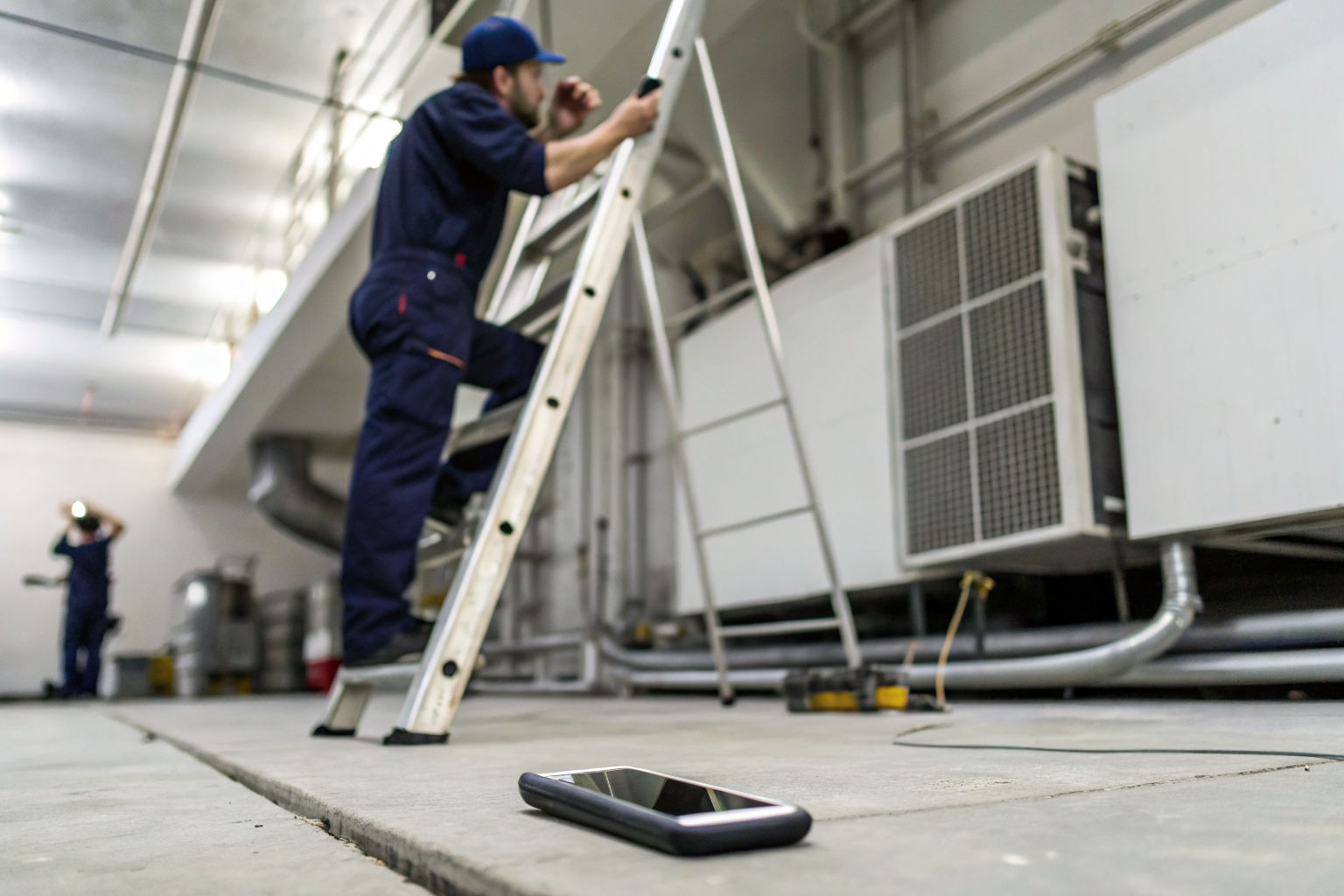
The tech-on-a-ladder problem is what happens when the person running the business is also the person doing the work. This means every incoming call competes with an active job, and the phone loses. For most trades, that’s a manageable nuisance. For Phoenix HVAC companies, it’s a revenue crisis.
HVAC companies in Phoenix lose booked jobs to unanswered calls during the summer AC emergency surge at a rate no other trade matches. A plumber who misses a call might lose a $400 drain job. An HVAC tech who misses a call in July might lose a $3,000 full system replacement, to whoever picked up next.
85% of missed calls never call back. That number is brutal in any industry. In Phoenix HVAC, it’s catastrophic, because the caller has a broken AC at 108°F and a child in the house. They’re not leaving a voicemail and waiting patiently. They’re calling down the list until someone answers.
June through September, Phoenix regularly sees highs above 110°F. AC failure during those months is not an inconvenience. It is a health emergency. Call volume spikes hard during peak heat and spikes again during monsoon season (July through August), when power surges knock out compressors across the Valley overnight. The window to capture that caller is minutes. A competitor who answers on the second ring gets the job.
Unlike a dental office or a salon, industries where an AI receptionist for salons or medical front desks handles booking for scheduled appointments, HVAC emergency calls don’t wait for office hours. They come in at 9 PM on a Saturday. That’s the problem an AI receptionist solves.
What Does an AI Receptionist Actually Do for an HVAC Company?
67% of customers hang up if they don’t receive immediate assistance. For a standard voicemail, that statistic is a death sentence. An AI receptionist removes it from the equation by answering every call on the first or second ring, at any hour, without putting the caller on hold.
Here’s the specific workflow for an HVAC company:
- Answer immediately. The AI picks up the call 24/7, day or night, weekday or weekend. The caller hears a live voice, not a recording asking them to leave a message.
- Identify the call type. The AI asks qualifying questions specific to HVAC: Is the system completely down, or is it running but not cooling? Is there a burning smell or unusual noise? Are there elderly, infants, or medically vulnerable people in the home? These aren’t generic intake questions, they’re the triage logic that separates an emergency dispatch from a next-week maintenance request.
- Route emergencies in real time. If the call qualifies as an emergency, the AI captures the caller’s name, address, and issue summary, then immediately sends an SMS alert to the on-call tech. No relay delay. No message chain. The tech gets a text with the full situation in seconds.
- Book routine calls directly. Maintenance requests, tune-ups, and quote requests go straight into the calendar. The caller gets booked and confirmed before they hang up.
- Send a confirmation text. Every caller, emergency or routine, gets a text confirmation with the next step, either a callback ETA from the on-call tech or a booked appointment time.
This is what separates an AI receptionist from a generic answering service or voicemail. The answering service takes a message and emails it to you at 8 AM. The AI handles triage, escalation, and booking in real time, the same night the call comes in.
For context on how this fits the broader picture of ai for customer service in field-service businesses, the triage logic here is the HVAC-specific layer on top of what any well-built AI receptionist does across industries.
Phoenix’s Surge Seasons: When Call Volume Hits and What It Costs to Miss It

Phonix HVAC call volume isn’t flat across the year. It spikes hard in predictable windows, and each window carries a different call type and a different job value. Understanding the pattern is how you calculate what missed calls actually cost.
Phoenix experiences roughly 110 days per year above 100°F (NOAA data). Monsoon season runs June 15 through September 30. HVAC emergency job values range from $300 (refrigerant recharge) to $3,000+ for a full system replacement.
| Surge Window | Call Type | Typical Job Value | After-Hours Exposure | Urgency Level |
|---|---|---|---|---|
| Pre-summer tune-up rush (April–May) | Preventive maintenance, system checks | $150–$400 | Low | Routine, can wait days |
| Peak emergency season (June–September) | AC failure, no cooling, emergency dispatch | $800–$3,000+ | High, evenings and weekends | Critical, hours matter |
| Monsoon-triggered outages (July–August) | Compressor failure, power surge damage | $600–$2,500 | Very high, overnight spikes | Critical, same night |
| Snowbird return / heating season (October–November) | System startup, heat pump service, furnace checks | $200–$600 | Low to moderate | Moderate, same week |
Now do the math. During peak emergency season, a Phoenix HVAC company that misses three calls per week is losing between $2,400 and $9,000+ in potential revenue every seven days. Over a 17-week peak season (June through September), that’s $40,000 to $150,000 in jobs that went to whoever answered the phone.
An AI receptionist runs at $397 per month. Over the full peak season (roughly four months), that’s $1,588. If it captures one additional emergency dispatch call per week that would have gone to voicemail, the math resolves itself in the first week of June.
The monsoon window is the one that catches HVAC owners off guard. Compressor failures from power surges come in overnight, in clusters, after a storm rolls through. A company with no after-hours coverage misses every one of those calls. A company with an AI receptionist captures them all.
For comparison, the ai receptionist for pool service article covers a similar surge-season dynamic in the pool trade. HVAC’s emergency call values run higher, but the pattern is the same: Phoenix seasonality creates concentrated windows where missed calls cost the most.
After-Hours and Emergency Dispatch: How the AI Handles Calls When You’re Off the Clock

92% of customer interactions happen over the phone. For HVAC, the most valuable subset of those interactions happens after 6 PM in July. Field-service industry reports indicate after-hours AC failure calls in Phoenix peak between 8 PM and midnight during July and August. That’s the window where most HVAC companies have zero coverage.
The AI receptionist handles after-hours HVAC emergency calls through a two-stage process: qualify first, escalate second. The AI does not try to diagnose the system or make a dispatch decision. That’s not its job. Its job is to capture the caller before they hang up and call a competitor, determine whether the situation requires a same-night response, and get the right information to the on-call tech immediately.
For a true emergency, AC completely out, no cooling, vulnerable occupants, the AI captures the caller’s name, address, callback number, and a brief problem description. It then sends that summary to the on-call tech by SMS within seconds. The tech calls the customer back and makes the dispatch decision with full context already in hand. No phone tag. No message relay through an overnight service. The tech gets a clean summary and makes the call.
For a call that can wait, a system running but struggling, a noise that started today, a unit that needs a look, the AI books the appointment for the next available slot and sends the caller a confirmation. No one gets woken up at midnight for a maintenance request.
The objection worth addressing here: what if the situation is complicated and the AI can’t handle it? The AI doesn’t try to handle complicated situations. It captures the caller, qualifies the urgency, and escalates. The tech handles everything after that. An AI that knows its lane is more reliable than a human answering service operator who improvises.
For businesses troubleshooting how their AI receptionist handles edge cases in the field, the ai receptionist troubleshooting common problems guide covers configuration and escalation path adjustments in detail.
What Does an HVAC Answering Service Cost, and What’s the Real ROI?

HVAC companies in Phoenix have three real options for covering inbound calls. The AI receptionist cost compares favorably to both alternatives when you measure it against job value per captured call rather than monthly line-item cost.
| Feature | Full-Time Dispatcher / Receptionist | Human Answering Service | AI Receptionist |
|---|---|---|---|
| Monthly cost | $2,500–$3,500+ (Phoenix wage, per BLS) | $200–$600/month (per-minute or per-call billing) | Plans start at $397/month |
| Coverage hours | Business hours only | 24/7 with relay delay | 24/7, real-time |
| Emergency triage | Yes, if trained | Inconsistent, relay-dependent | Yes, built-in logic |
| Calendar booking | Yes | No, message only | Yes, direct booking |
| Tech SMS alert | Depends on process | No, email or phone relay | Yes, instant |
| Scales during surge | No, one person, one call | Limited by agent availability | Yes, handles simultaneous calls |
A Phoenix receptionist earns $30–42K per year, plus benefits, plus turnover cost. A human answering service runs $200–$600 per month but takes messages rather than booking appointments, charges per call during surge season when volume is highest, and has no calendar integration.
The AI receptionist at $397/month covers 24/7 calls, handles triage, books routine appointments, and sends emergency alerts to the on-call tech. The 14-day trial means you can test it against your actual call volume before committing.
The ROI math is straightforward for companies with real call volume. One captured AC replacement call per month ($1,500–$3,000 job value) pays for the service several times over. One per week during peak season changes the annual revenue picture.
Be honest about the break-even: for an HVAC company taking fewer than 20 calls per week, the payback timeline is slower. The service still covers after-hours and emergency calls that would otherwise be missed, but the raw volume math takes longer to resolve. If you’re in that range, the emergency-dispatch coverage during surge season is the primary value driver, not the booking volume.
For a broader look at what AI receptionist services cost and how Phoenix businesses compare options, the answering service arizona comparison covers the full market, including human and hybrid alternatives.
For businesses in regulated call environments, the tcpa ai calls compliance guide explains what disclosure requirements apply to AI-answered phone lines before you go live.
Frequently Asked Questions
What’s the best answering service for an HVAC company that gets emergency calls?
An AI receptionist built with emergency triage logic beats a standard human answering service for HVAC because it answers with no hold time, qualifies the caller as emergency or routine on the first exchange, and sends a full summary to the on-call tech within seconds. Human answering services relay messages with a delay, in a Phoenix summer, that delay costs you the job. The AI handles capture and escalation; your tech makes the dispatch decision.
Can an AI receptionist handle HVAC dispatch calls after hours?
Yes. The AI answers every call 24/7 regardless of when it comes in, identifies whether the issue is an active emergency or a next-day service request, and routes accordingly. For emergencies, it captures caller information and the problem summary, then alerts the on-call tech by SMS. The AI qualifies and escalates, the tech makes the final dispatch call.
Does an AI receptionist for HVAC integrate with scheduling software?
A well-built AI receptionist connects to your existing calendar and booking system to schedule appointments during the call, without requiring a callback or manual entry. Routine maintenance and quote requests get booked and confirmed before the caller hangs up. Emergency dispatch calls follow a separate path, immediate tech notification rather than calendar booking, because a broken AC at midnight is not a scheduled appointment.